amd
AM DIAGNOSTICS · LABORATORY TEST RESULTS
How Much Load Can Revolubes Take?
We tested Revolubes alongside alternative lubricants to find out how well they protect metal surfaces under extreme loads and sustained mechanical stress.
High Loads. Less Wear. Measurable Results.
01 / THE RESULTS
Five Tests.
One Tough Test Bench.
Revolubes reached the maximum applied load in each of these laboratory Seizure Point tests without seizure . Choose a result to explore the comparisons.
 Bicycle Chain Lubes Paste Shopify CDN WebP chart URL into the img src above
  Motorcycle Chain Lubes Paste Shopify CDN WebP chart URL into the img src above
  Bearing Greases Paste Shopify CDN WebP chart URL into the img src above
  Engine Oils · Cold Paste Shopify CDN WebP chart URL into the img src above
  Engine Oils · Hot Paste Shopify CDN WebP chart URL into the img src above
← Swipe to see all five results →
Loads represent the cylinder-load reading of the Block-on-Ring test apparatus, not loads experienced by a real bicycle chain, bearing or engine.
“>” means seizure was not observed up to the highest load applied in that test.
A lubricant may resist seizure yet still leave significant wear. That's why we also measure the grooves formed on the metal surfaces.
02 / WHY IT MATTERS
Because Protection Is About More Than a Quiet Machine.
Whenever moving metal surfaces are insufficiently separated by lubricant, friction and wear can increase.
It matters inside bicycle chains, motorcycle chains, bearings and engines.
Resistance to Seizure
How well does a lubricant prevent the test mechanism from seizing up as load increases?
Resistance to Wear
How little surface damage does it leave while protecting against sustained mechanical load?
We examine both, so you can look beyond the headline numbers.
03 / EXPLORE THE TESTS · 01
Bicycle Chain Lubricants
A bicycle chain relies on lubricant retained between its moving parts. We compared Revolubes with six alternative chain-lubrication technologies.
>282.19 kg
No seizure at maximum applied cylinder load.
Beyond Load: How Much Contact Pressure?
A smaller wear groove means the load is spread over a smaller contact area.
Compare the load, groove size and estimated average pressure together.
kg Cylinder Load · No Seizure
mm² Groove Contact Area
MPa Estimated Contact Pressure
Compare all samples · Load, Wear & Contact Pressure
| Lubricant | Cylinder Load [kg] | Groove Depth [mm] | Contact Area [mm²] | Est. Contact Pressure [MPa] |
|---|---|---|---|---|
| Revolubes Clear Blend | >282.19 | 0.102 | 7.04 | >392.99 |
| Wax Drip Lube | 67.10 | 0.520 | 33.44 | 19.68 |
| Liquid Wax Coating | 65.26 | 0.499 | 31.52 | 20.31 |
| Ceramic Wet Lube | 65.26 | 0.536 | 34.11 | 18.77 |
| Wet Lube | 61.59 | 0.539 | 34.03 | 17.75 |
| Water & Wax Emulsion | 55.15 | 0.615 | 40.50 | 13.36 |
| Penetrant with Teflon | 45.96 | 0.481 | 30.27 | 14.89 |
| Benchmark · No Lubricant | 45.96 | 0.620 | 37.71 | 11.96 |
Estimated average contact pressure = Cylinder Load × g (9.81) ÷ Groove Contact Area.
Values are nominal averages, not measured local stresses.
> denotes the maximum applied load without seizure; it is not a measured seizure point.
The unlubricated benchmark is identical across categories.
The Revolubes bar represents the highest load applied without seizure, not its measured seizure point.
Watch the tests · Seizure Point
Watch the six alternative bicycle lubricant tests
Reference: no-lubricant benchmark ↓
03 / EXPLORE THE TESTS · 02
Motorcycle Chain Lubricants
Motorcycle chains transmit substantial forces while exposed to road dirt and water, relying on lubricant retained between its moving parts.
We evaluated both seizure resistance and wear during sustained loading.
>348.37 kg
No seizure at maximum applied cylinder load.
Beyond Load: How Much Contact Pressure?
A smaller wear groove means the load is spread over a smaller contact area.
Compare the load, groove size and estimated average pressure together.
kg Cylinder Load · No Seizure
mm² Groove Contact Area
MPa Estimated Contact Pressure
Compare all samples · Load, Wear & Contact Pressure
| Lubricant | Cylinder Load [kg] | Groove Depth [mm] | Contact Area [mm²] | Est. Contact Pressure [MPa] |
|---|---|---|---|---|
| Revolubes Chain Lube | >348.37 | 0.078 | 5.62 | >608.51 |
| Chain Lube "Alpha" | 236.23 | 0.134 | 10.45 | 221.76 |
| Chain Lube "Bravo" | 201.30 | 0.435 | 29.73 | 66.43 |
| Chain Lube "Charlie" | 117.66 | 0.398 | 26.32 | 43.86 |
| Chain Lube "Delta" | 77.21 | 0.355 | 22.09 | 34.29 |
| Benchmark · No Lubricant | 45.96 | 0.620 | 37.71 | 11.96 |
Estimated average contact pressure = Cylinder Load × g (9.81) ÷ Groove Contact Area.
Values are nominal averages, not measured local stresses.
> denotes the maximum applied load without seizure; it is not a measured seizure point.
The unlubricated benchmark is identical across categories.
The Revolubes bar represents the highest load applied without seizure, not its measured seizure point.
Watch the tests · Seizure Point
Watch competitor Seizure Point tests
Creep Test · Wear Under Sustained Load
At approximately 49 kg for four minutes, Revolubes left a groove just 0.018 mm deep. The next lowest result was 0.223 mm.
| Sample | 49 kg · 4 min [mm] | 98 kg · 4 min [mm] | 242 kg · 2 min [mm] |
|---|---|---|---|
| Revolubes | 0.018 | 0.028 | 0.081 |
| Alpha | 0.321 | — | — |
| Bravo | 0.223 | 0.408 | — |
| Charlie | 0.323 | — | — |
| Delta | 0.501 | — | — |
Featured · Revolubes Creep Test footage
Watch competitor Creep Tests · 49 kg
Watch competitor Creep Tests · 98 kg
Only samples below 0.25 mm groove depth qualified for the next stage.
See the method ↓
Reference: no-lubricant benchmark ↓
03 / EXPLORE THE TESTS · 03
Bearing Greases
We compared Revolubes Bearing Grease with a selection of grease technologies, including lithium, molybdenum, copper and calcium-complex formulations.
>332.74 kg
No seizure at maximum applied cylinder load.
Beyond Load: How Much Contact Pressure?
A smaller wear groove means the load is spread over a smaller contact area. Compare the load, groove size and estimated average pressure together.
kg Cylinder Load · No Seizure
mm² Groove Contact Area
MPa Estimated Contact Pressure
Compare all samples · Load, Wear & Contact Pressure
| Lubricant | Cylinder Load [kg] | Groove Depth [mm] | Contact Area [mm²] | Est. Contact Pressure [MPa] |
|---|---|---|---|---|
| Revolubes Bearing Grease [NLGI-1] | >332.74 | 0.096 | 6.88 | >474.3 |
| Lithium-Molybdenum Grease [NLGI-2] | 303.33 | 0.457 | 29.51 | 100.8 |
| Molybdenum Grease [NLGI-2] | 228.88 | 0.506 | 31.74 | 70.7 |
| Copper Grease [NLGI-2] | 146.15 | 0.429 | 27.96 | 51.3 |
| Lithium Grease [NLGI-0] | 125.01 | 0.404 | 26.52 | 46.2 |
| Calcium Complex Grease [NLGI-2] | 87.32 | 0.374 | 24.19 | 35.4 |
| Lithium Grease [NLGI-1] | 60.67 | 0.404 | 25.13 | 23.7 |
| Lithium Complex Grease [NLGI-2] | 45.96 | 0.331 | 21.35 | 21.1 |
| Benchmark · No Lubricant | 45.96 | 0.620 | 37.71 | 12.0 |
Estimated average contact pressure = Cylinder Load × g (9.81) ÷ Groove Contact Area.
Values are nominal averages, not measured local stresses.
> denotes the maximum applied load without seizure; it is not a measured seizure point.
The unlubricated benchmark is identical across categories.
The Revolubes bar represents the highest load applied without seizure, not its measured seizure point.
Watch the tests · Seizure Point
Watch competitor grease Seizure Point tests
Creep Test · Wear Under Sustained Load
At approximately 49 kg for four minutes, Revolubes left a groove depth of 0.054 mm , compared with 0.157 mm for the next lowest measurement.
| Sample | 49 kg · 4 min [mm] | 98 kg · 4 min [mm] | 251 kg · 2 min [mm] |
|---|---|---|---|
| Revolubes [NLGI-1.5] | 0.054 | 0.036 | 0.058 |
| Copper [NLGI-2] | 0.157 | 0.539 | — |
| Lithium-Molybdenum [NLGI-2] | 0.332 | — | — |
| Molybdenum [NLGI-2] | 0.370 | — | — |
| Calcium Complex [NLGI-2] | 0.396 | — | — |
| Lithium [NLGI-0] | 0.402 | — | — |
| Lithium Complex [NLGI-2] | 0.440 | — | — |
| Lithium [NLGI-1] | 0.661 | — | — |
Featured · Revolubes Creep Test footage
Watch competitor Creep Tests · 49 kg
Watch competitor Creep Tests · 98 kg
Reference: no-lubricant benchmark ↓
03 / EXPLORE THE TESTS · 04
Engine Oils · Cold Run
We tested a conventional 15W-40 oil treated with 5% Revolubes PM Tribo-Shield by volume . The same mixture was examined in cold and hot Seizure Point tests.
>376.86 kg
No seizure at maximum applied cylinder load.
The treated oil reached the maximum applied cylinder load without seizure. The five untreated comparison oils seized at approximately 87–100 kg.
Beyond Load: How Much Contact Pressure?
A smaller wear groove means the load is spread over a smaller contact area. Compare the load, groove size and estimated average pressure together.
kg Cylinder Load · No Seizure
mm² Groove Contact Area
MPa Estimated Contact Pressure
Compare all samples · Load, Wear & Contact Pressure
| Lubricant | Cylinder Load [kg] | Groove Depth [mm] | Contact Area [mm²] | Est. Contact Pressure [MPa] |
|---|---|---|---|---|
| 15W-40 + 5% PM Tribo-Shield | >376.86 | 0.018 | 2.13 | >1735.1 |
| 15W-40 Car Engine Oil Regular | 88.24 | 0.345 | 21.74 | 39.8 |
| 10W-40 Motorcycle 4T Regular | 87.32 | 0.343 | 22.26 | 38.5 |
| 5W-40 Car Engine Oil Regular | 91.00 | 0.353 | 23.50 | 38.0 |
| 10W-40 Motorcycle 4T Racing | 99.27 | 0.398 | 26.32 | 37.0 |
| 20W-50 Car Engine Oil Racing | 100.19 | 0.398 | 26.94 | 36.5 |
| Benchmark · No Lubricant | 45.96 | 0.620 | 37.71 | 12.0 |
Estimated average contact pressure = Cylinder Load × g (9.81) ÷ Groove Contact Area.
Values are nominal averages, not measured local stresses.
> denotes the maximum applied load without seizure; it is not a measured seizure point.
The unlubricated benchmark is identical across categories.
The Revolubes bar represents the highest load applied without seizure, not its measured seizure point.
Featured video · Cold Seizure Point
Watch untreated engine oils · Cold Run
03 / EXPLORE THE TESTS · 05
Engine Oils · Hot Run
The same 15W-40 oil with 5% PM Tribo-Shield withstood the maximum applied load without seizure under the hot-test conditions. Untreated oils seized between approximately 168 and 245 kg.
Beyond Load: How Much Contact Pressure?
A smaller wear groove means the load is spread over a smaller contact area. Compare the load, groove size and estimated average pressure together.
kg Cylinder Load · No Seizure
mm² Groove Contact Area
MPa Estimated Contact Pressure
Compare all samples · Load, Wear & Contact Pressure
| Lubricant | Cylinder Load [kg] | Groove Depth [mm] | Contact Area [mm²] | Est. Contact Pressure [MPa] |
|---|---|---|---|---|
| 15W-40 + 5% PM Tribo-Shield | >376.86 | 0.016 | 1.79 | >2064.7 |
| 20W-50 Car Engine Oil Racing | 190.27 | 0.121 | 8.29 | 225.1 |
| 10W-40 Motorcycle 4T Racing | 216.93 | 0.140 | 8.90 | 239.0 |
| 10W-40 Motorcycle 4T Regular | 176.48 | 0.133 | 9.75 | 177.5 |
| 5W-40 Car Engine Oil Regular | 168.21 | 0.479 | 29.52 | 55.9 |
| 15W-40 Car Engine Oil Regular | 244.50 | 0.527 | 35.24 | 68.0 |
| Benchmark · No Lubricant | 45.96 | 0.620 | 37.71 | 12.0 |
Estimated average contact pressure = Cylinder Load × g (9.81) ÷ Groove Contact Area.
Values are nominal averages, not measured local stresses.
> denotes the maximum applied load without seizure; it is not a measured seizure point.
The unlubricated benchmark is identical across categories.
The Revolubes bar represents the highest load applied without seizure, not its measured seizure point.
Featured video · Hot Seizure Point
Watch untreated engine oils · Hot Run
Creep Test · Wear Under Sustained Load
The provided Creep Test results show 0.008 mm groove depth for the treated oil at approximately 49 kg over four minutes, compared with 0.207 mm for the next lowest measurement.
| Sample | 49 kg · 4 min [mm] | 98 kg · 4 min [mm] | 249 kg · 4 min [mm] |
|---|---|---|---|
| Oil + PM Tribo-Shield | 0.008 | 0.016 | 0.079 |
| 10W-40 Racing | 0.207 | 0.274 | — |
| 5W-40 Regular | 0.378 | — | — |
| 20W-50 Racing | 0.431 | — | — |
| 15W-40 Regular | 0.479 | — | — |
| 10W-40 Regular | 0.548 | — | — |
Featured · PM Tribo-Shield Creep Test footage
Watch untreated oils · Creep Test at 49 kg
Watch untreated oils · Creep Test at 98 kg
Reference: no-lubricant benchmark ↓
04 / UNDERSTANDING THE NUMBERS
It's Not Just About the Load.
Two lubricants may withstand the same load, yet leave very different wear grooves.
As the rotating ring wears a groove into the block, the contact area can increase. This spreads the applied load over a wider surface. A large load reading therefore tells only part of the story.
Seizure Resistance
The maximum load reached without seizure, or the load at which seizure occurs.
Surface Protection
The size and depth of the wear groove created under the conditions of the test.
Advanced: How is estimated contact pressure calculated?
Estimated average contact pressure [MPa] = Cylinder load [kg] × 9.80665 ÷ Groove contact area [mm²]
Here the recorded cylinder load already accounts for the testing machine's lever ratio: Scale load × lever ratio = Cylinder load.
This is a nominal average contact pressure calculated from the measured groove contact area. It is not a direct measurement of peak local stress or a certified ASTM seizure-pressure rating.
05 / HOW WE TEST
What Happens Inside the Test Machine?
AM Diagnostics uses a TIMKEN-style Block-on-Ring rig. A stationary metal block is pressed against a rotating ring. The lubricant sits at the contact, where load, movement and wear can be observed.
01 · Seizure Point Test
The applied load increases progressively until the mechanism seizes and the drive motor stops, or the maximum load for that run is reached.
The load and resulting groove measurements are recorded.
02 · Creep Test
A constant load is maintained for a defined period. Groove depth and geometry are measured after the test.
Motor current may be monitored as an indirect indicator of mechanical resistance; no quantified friction coefficient is claimed here.
These are AM Diagnostics in-house test procedures, not certified ASTM test methods.
05 / THE REFERENCE TEST
What Happens With No Lubricant?
In the unlubricated reference test, the mechanism seized at a cylinder load of 45.96 kg. The same reference conditions apply across the four tested product categories.
06 / THE PRODUCTS
Choose Your Revolubes Formula.
07 / QUESTIONS & ANSWERS
Frequently Asked Questions
Are these independent laboratory tests?
The tests were carried out by AM Diagnostics Ltd., the company behind Revolubes. They are internal comparative tests, not independent third-party certification.
Are these ASTM Timken results?
No. AM Diagnostics uses in-house Seizure Point and Creep Test procedures on TIMKEN-style Block-on-Ring equipment.
What does “>348 kg” mean?
The test reached that cylinder load without seizure. It does not mean seizure occurred at precisely 348 kg.
Does a higher seizure load always mean less wear?
No. Groove depth and contact area are also important, which is why the test interpretation considers both load and wear geometry.
What does estimated contact pressure mean?
It is the applied force divided by the calculated groove contact area. It describes nominal average pressure, not the complete local stress distribution.
Why are some Creep Test cells blank?
Only samples with groove depth below 0.25 mm progressed to the next stage. A dash means no result was recorded for that stage.
Does the engine-oil result apply to every engine oil?
No. The reported values describe the particular oil and 5% PM Tribo-Shield mixture tested under defined laboratory conditions.
Can the results predict real-world lifespan or power savings?
Not directly. Laboratory loading tests cannot be converted into real-world mileage, engine longevity or measured drivetrain power savings without separate validation.
Testing disclosure: AM Diagnostics Ltd., UK, is the company behind Revolubes. These are in-house comparative Block-on-Ring tests, not independent verification or ASTM certification. Cylinder loads are test-machine values, not allowable operating loads in actual equipment. Comparisons apply only to the tested samples and conditions.
Cycling Products
-
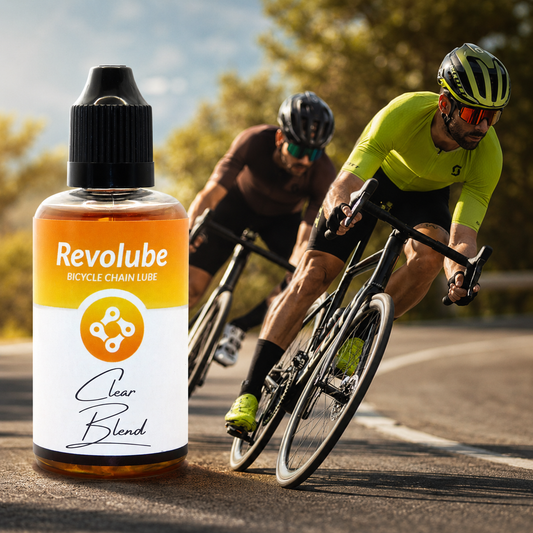
Bike Chain Lube - Clear Blend
Regular price $22.00Regular price$22.00Sale price $22.00 -
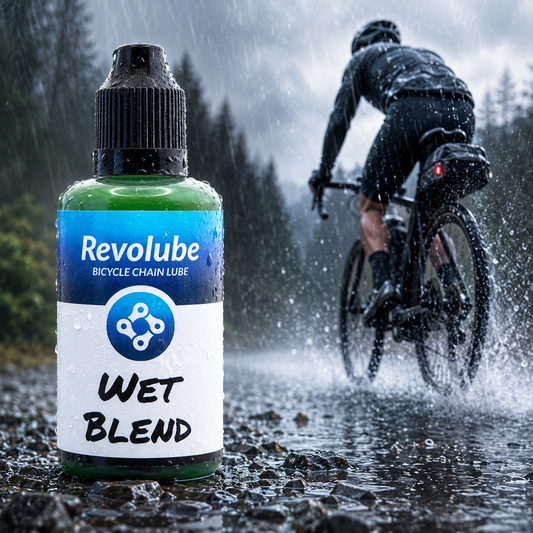
Bike Chain Lube - Wet Blend
Regular price $24.00Regular price$24.00Sale price $24.00 -
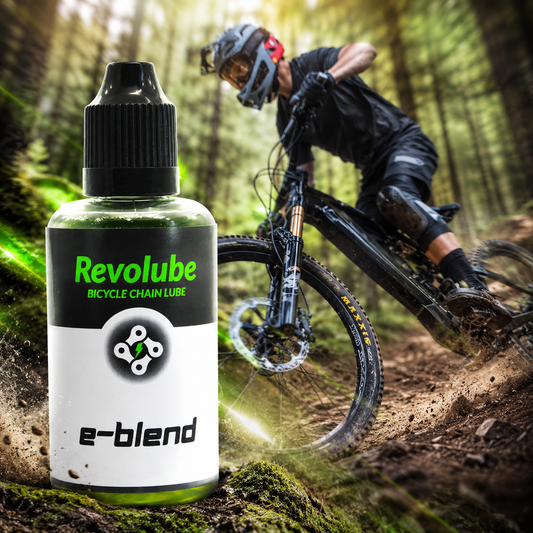
Bike Chain Lube - e-blend
Regular price $28.00Regular price$28.00Sale price $28.00 -
 Sold out
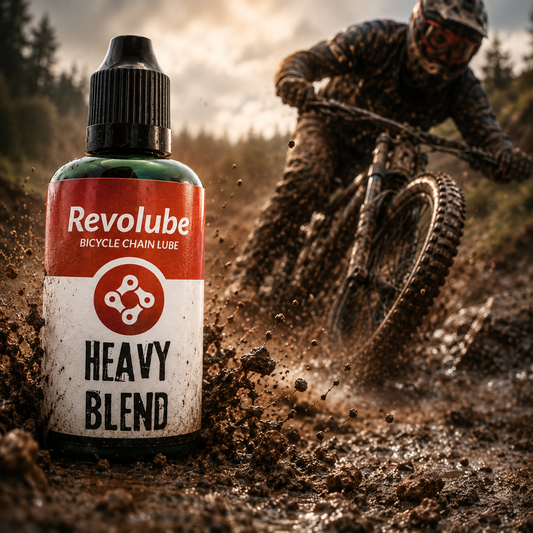
Bike Chain Lube - Heavy Blend
Regular price $19.00Regular price$19.00Sale price $19.00Sold out -
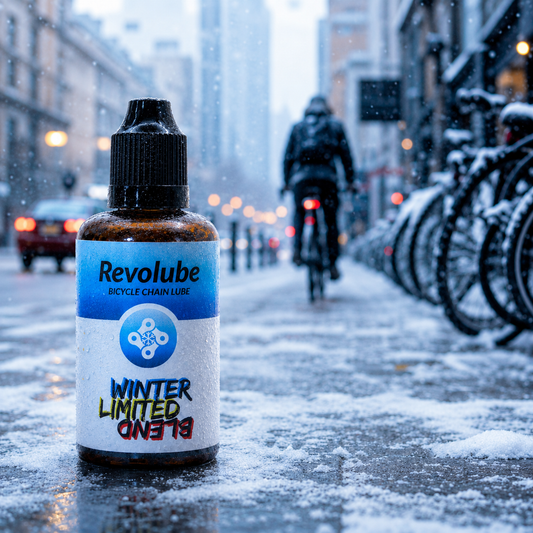
Bike Chain Lube - Limited Winter Blend
Regular price $25.00Regular price$25.00Sale price $25.00